
Why the Sonics left Seattle
What was the effect of the public arena-funding dispute on the SuperSonics’ departure from Seattle, 2006–2008?
A Real History project by Malhar Pawar, 2026.
Was the dispute the cause of the move, or the reason given for it?
My question asks for an effect. The dispute may have been the main cause, one cause among several, or mostly the public reason for a decision the owners had already made. I look for evidence from both sides and ask what each speaker stood to gain.
41years the Sonics played in Seattle (Kershner 2009)
- Theme: Politics and Power
- Seattle voters, the state legislature and NBA owners each held power over public money. For each one I ask what it could say yes or no to.
- Theme: Work, Exchange and Technology
- A private team asked taxpayers to pay for its arena while Oklahoma City offered public money to attract it. I follow the money, including what the 2008 settlement put a price on.
- Skill 5B: relating two processes
- Seattle’s response and the owners’ strategy are two processes. The timeline runs them side by side and the web shows where one pushed the other.
- Skill 6C: reasoning about evidence
- Sources conflict and each speaker had something to gain. Every card names its voice and a limit, and you can filter by voice.
Two tracks, one chain of events.
Seattle and Washington on the left, the owners on the right, shared events on the spine. Six milestones tip a domino as you pass. My first plan was a chain where each event knocks over the next. The evidence did not work like that.
Keep scrolling to travel through time.
Two tracks, one chain of events.
Seattle and Washington on the left, the owners on the right, shared events in the middle. My first plan was a chain where each event knocks over the next. The evidence did not work like that. Select a card to open its cause.
Seven causes pulling on each other.
Each circle is a possible cause, sized by the weight I give it today. Select one to see its evidence, whose voice it carries and what limits it. Dashed arrows show where one cause pushed another. They are my argument, not settled fact.
Drag the background to rotate. Pull a circle and it springs back. Select a circle to fly to it.
View the web as a list
| Cause | Weight | Theme | Pushed on |
|---|
Weigh it yourself.
Spend 100 points across the seven causes before you read mine. There is no right split. The useful question is what evidence would move yours.
What would change my mind
- The full email thread, not only the excerpts reported in the press.
- Evidence that the owners would have stayed if the state had paid the $300 million.
- The court record from the June 2008 trial.
- Attendance and revenue numbers for 2004 to 2008.
How and when, more than why.
The funding dispute shaped how and when the Sonics left more than why they left.
Within five months, from November 2006 to April 2007, both public routes closed. Seattle voters passed Initiative 91, which bound only the city, and the Legislature decided not to vote on a Renton arena that I-91 never touched. The state said no again in March 2008. That gave the owners a public record of having tried, and it set the timetable for the lease fight that followed.
But the dispute does not fully explain the move. The April 2007 emails, McClendon’s remark, and Bennett’s refusal to sell the team to the group behind the 2008 rescue plan all point toward owners who were already looking at Oklahoma City, which had voted public money by March 2008. Each piece of that evidence is contested and each speaker had something to gain, so I weigh the evidence instead of counting it.
The dispute closed the doors. The question is whether the owners were already looking for the exit.
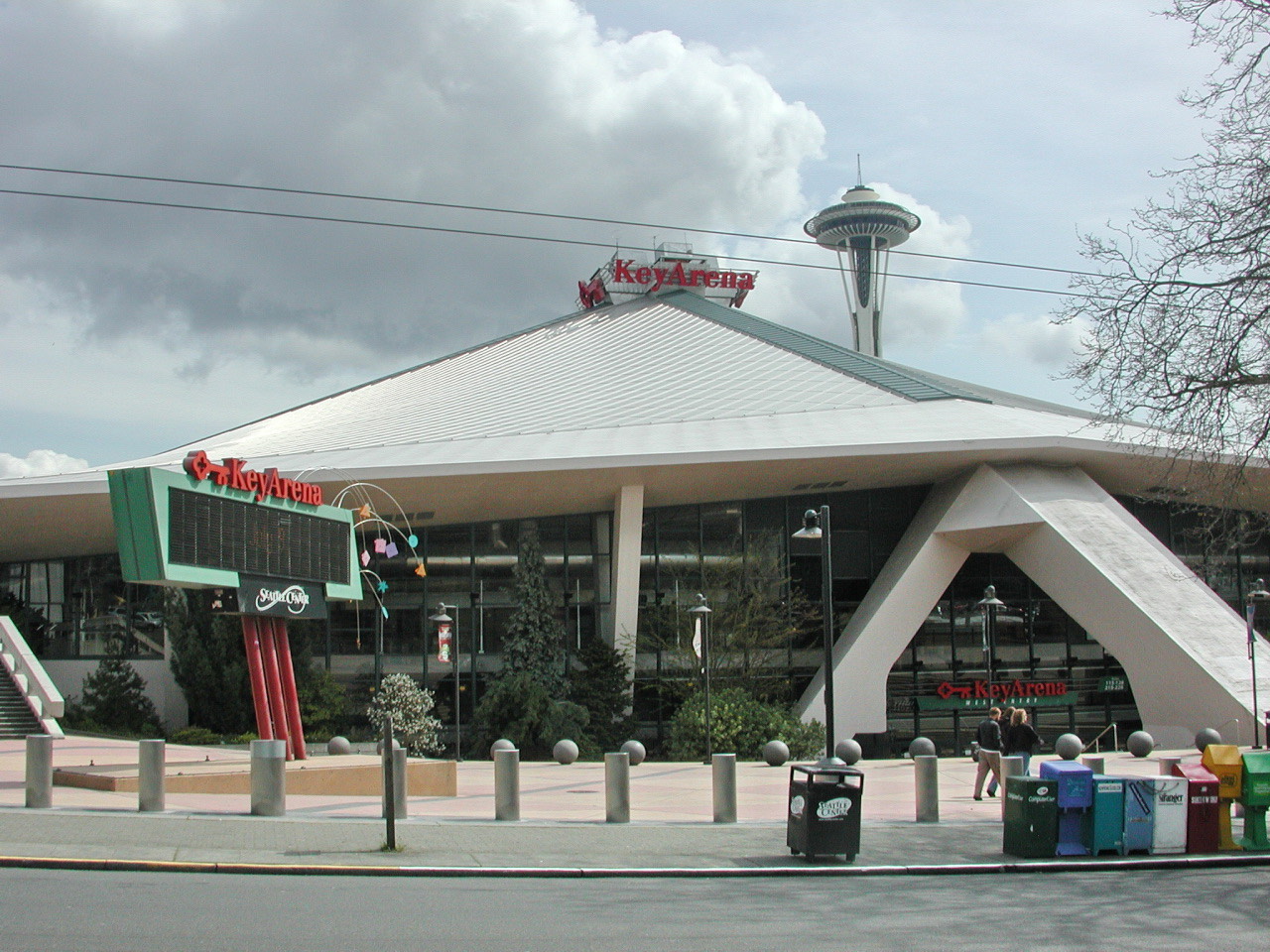
Two smaller causes matter too: falling popularity, which made taxpayers less willing to pay (Kershner 2009), and a KeyArena remodel that left it short of the revenue features modern NBA arenas rely on (Booth 2026).
- 74%of Seattle voters passed Initiative 91 in 2006. (Licata 2012)
- $300 millionof state-authorized King County taxes the owners asked for, toward a roughly $500 million Renton arena. The Legislature never voted on it. (Brunner 2007; Associated Press 2007)
- 28 to 2NBA owners approved the relocation in April 2008. (Kershner 2009)
What the dispute did
Closed the city’s route (I-91) and the state’s route (Renton, then KeyArena), and gave the owners a public reason for leaving.
What it may not explain
Why Bennett kept saying the team was not for sale, and why a partner was asking in April 2007 about moving the team “here for next season.”
What I still need
Stronger evidence on I-91’s role, the court record, original statements instead of second-hand reports, and attendance numbers.
What changed, and what did not.
The Sonics might return. The question that stalled the 2006 to 2008 efforts, who pays for the arena, now has a different answer.
| Question | 2006 to 2008 | 2026 |
|---|---|---|
| Who pays for the arena? | The owners asked for $300 million of state-authorized, King County taxes toward a roughly $500 million Renton arena. The Legislature never voted on it. (Brunner 2007; Associated Press 2007) | Climate Pledge Arena cost $1.15 billion and was financed privately by Oak View Group, under a development and lease contract with the city. (Eide 2021; Seattle Center) Continues: who pays is still the central question. Changed: the answer is private money. |
| Who decides if a team moves or returns? | NBA owners approved the relocation 28 to 2 in April 2008. (Kershner 2009) | NBA owners voted in March 2026 to explore expansion to Seattle and Las Vegas. (NBA Communications 2026) Continues: the league holds the final vote. |
| What did voters say? | 74% of Seattle voters passed Initiative 91 in 2006. (Licata 2012) | In 2012 the City Council was still testing a proposed arena deal against I-91. I have not yet confirmed how it applies today. (Licata 2012) Continues: the rule outlived the team. |
| What happened to the Sonics’ identity? | The settlement kept the name, logo and colors available for a replacement Seattle team. (Associated Press 2008) | I have not yet confirmed who controls the name and logo today. |
Where the NBA process stands, checked October 21, 2026
- March 25, 2026. The Board of Governors authorized the league to formally explore expansion to Las Vegas and Seattle, and hired PJT Partners as adviser. (NBA Communications 2026)
- October 16, 2026. Fox 13, relaying ESPN’s Brian Windhorst, reported that Commissioner Adam Silver told owners a Seattle team is “no longer a guaranteed lock,” and raised Mexico City as an alternative. (Fox 13 Seattle 2026)
- Reported by one outlet. Seattle’s leading group, led by Kraken co-owner Samantha Holloway, has offered roughly $6 billion, while Las Vegas bids could reach $10 billion. (Fox 13 Seattle 2026)
- August 2026. Seattle Times reporter Tim Booth said Silver appears interested in correcting what happened in Seattle. (Booth 2026)
Still open. How Initiative 91 shaped the later KeyArena and Climate Pledge deal, and whether it was ever formally applied.
Sources.
MLA entries for every source on this page. Each is also a card in the causal web, with its voice and its limits.
Still to find for the final
- Court record: City of Seattle v. Professional Basketball Club and the 2008 settlement agreement.
- The owners’ side: Howard Schultz’s memoir From the Ground Up (2019) and original interviews with Bennett or McClendon.
- Oklahoma City’s side: David Holt’s Big League City (2012).
- The fan view: the documentary Sonicsgate (2009), fan-made and openly biased, useful for judging a source’s point of view.
- Economics: research on stadium subsidies and local economies.
- Initiative 91: the text of the measure and how it was applied to the 2012 and 2018 arena proposals.
Image credits
Every photo on this page is from Wikimedia Commons, used under the license shown. Photos are resized, cropped and in some places tinted green and gold. Share-alike licenses carry over to those versions. The full list with retrieval dates is in IMAGE_CREDITS.md in the project files.